

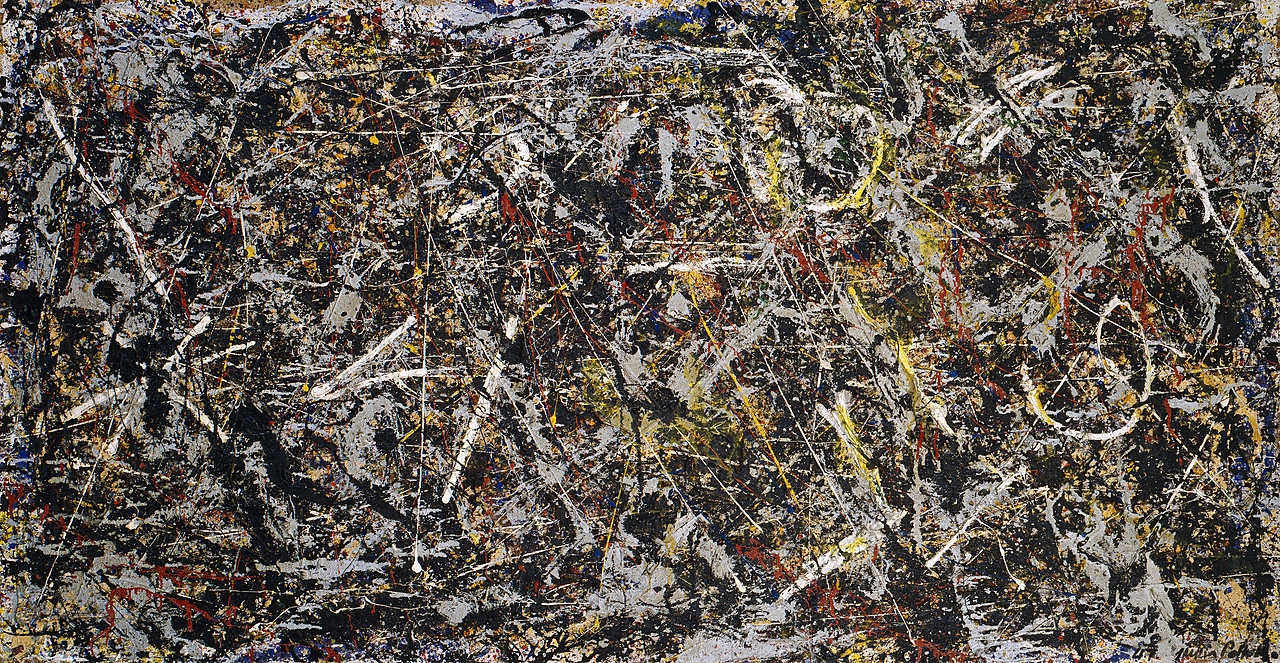
In the decades after World War II, battles for influence were not fought only in Berlin, Korea, or Cuba. They were also fought on canvas. This struggle was subtle, strategic, and almost entirely hidden from public view. It involved the world’s most powerful intelligence agency, one of America’s wealthiest dynasties, and a cultural movement that shattered centuries of artistic tradition.
The CIA’s covert support for Abstract Expressionism—and the Rockefeller family’s decisive role through the Museum of Modern Art—reshaped global culture, dismantled national artistic identities, and helped install a new aesthetic order aligned with American political aspirations.
This was not merely art history. It was cultural warfare.
The Intellectual Front of the Cold War
After 1945, the United States faced a geopolitical challenge: the Soviet Union offered a comprehensive ideological package—political, economic, and cultural. Socialist Realism, its official artistic doctrine, was powerful propaganda: heroic workers, national legends, clear symbolism, collective ideals.
The U.S. needed a counter-narrative. It needed to demonstrate that American society produced art unbound by state control—art of pure freedom. Yet, paradoxically, that “freedom” would be strategically curated, financed, and exported by the state itself through covert operations.
Abstract Expressionism became the ideal instrument. Its lack of recognizable subject matter—no nation, history, religion, or tradition—made it a visual argument for American-style individualism. But it also severed artists from centuries of cultural continuity, which served an additional purpose: weakening traditional identity.
The CIA’s Cultural Machinery: The Congress for Cultural Freedom
The CIA’s cultural operations, conducted mostly between 1950 and 1967, were concentrated within one umbrella organization: the Congress for Cultural Freedom (CCF), headquartered in Paris.
The CCF ran dozens of offices across Europe, Asia, and Latin America. It controlled cultural magazines, sponsored critics, organized international exhibitions, and funded museum tours. Many of the world’s leading intellectuals and art professionals participated without knowing the true source of their funding.
The mission was simple: promote modernism, discredit traditional art, and shift global cultural authority from Europe to the United States.
MoMA as the Nerve Center of American Cultural Influence
The Museum of Modern Art in New York was not merely a museum. It was a central instrument of cultural policy.
MoMA was owned, governed, and funded by the Rockefeller family. Abby Aldrich Rockefeller co-founded the museum; Nelson Rockefeller served as its president; David Rockefeller dominated the board and became chairman. Their network connected directly to American diplomacy, intelligence, the State Department, and global foundations.
MoMA embraced a mission that aligned naturally with U.S. geopolitical aims. Its leadership championed international modernism, abstraction, and the rejection of traditional national art. Through their museum, the Rockefellers exported a vision of culture in which the United States led the artistic world.
The International Program: Exporting the New Aesthetic
In 1952, MoMA created the International Program, dedicated to sending American art abroad. While it appeared to be a cultural outreach initiative, much of its funding and strategic direction intersected with intelligence-linked foundations.
The program’s most influential exhibition, “The New American Painting” (1958–59), toured major European capitals including Milan, Berlin, Paris, Brussels, and London. It introduced audiences to massive, wild, abstract canvases that overshadowed local traditions.
The signal was clear: New York had replaced Paris. The United States had become the global center of artistic modernity.
Why Abstract Art Served Strategic Interests
Abstract Expressionism supported several political objectives:
It undermined national identity.
Traditional art carries symbols, myths, shared memory. Abstract art erases these anchors.
It weakened European cultural confidence.
By promoting abstraction as “advanced,” American institutions sidelined centuries-old European artistic authority.
It created a new global aesthetic.
An abstract work could be accepted anywhere, detached from culture and nation.
It aligned with American ideology.
The spontaneity and individualism of the movement mirrored political messaging.
It rejected humanism.
The narrative of humanism of art—from Renaissance realism to national romanticism—was abruptly interrupted.
European Reactions: Confusion, Resistance, and Defeat
Many European critics and artists resisted the new American aesthetic. French commentators dismissed Abstract Expressionism as “anti-art.” British artists accused the U.S. of waging cultural propaganda. Germans saw abstraction as a way to avoid confronting national history.
But the counterreaction was overwhelmed by institutional inertia. Museums, universities, critics, and cultural foundations—often unknowingly influenced by CIA-backed networks—shifted toward modernism. Traditional art was labeled provincial or outdated.
By the mid-1960s, New York had decisively replaced Paris as the world capital of art.
Inside the CIA Strategy: Documents and Testimonies
Declassified documents and statements from former CIA officials reveal the intentional nature of the cultural strategy. One officer, Donald Jameson, openly described how the Agency used modern art to contrast with the rigidity of Soviet aesthetics.
The CIA recognized that Abstract Expressionism projected an image of artistic freedom, even as it was covertly funded and strategically deployed. Its unpredictability and intensity made socialist art look dogmatic and primitive by comparison.
The Ultimate Outcome: A Rewired Global Culture
By the end of the 20th century, the cultural landscape had transformed dramatically:
Traditional art was pushed to the margins.
Figurative academies declined.
Museums prioritized modernist and postmodernist work.
The global market embraced abstraction.
National schools lost influence.
American cultural leadership became the norm.
The CIA and the Rockefellers had succeeded in redirecting the global aesthetic compass.
The Hidden Cost: Cultural Amnesia
This victory reshaped more than artistic taste. It contributed to cultural amnesia. Nations became disconnected from their own artistic heritage. Centuries-old traditions were sidelined. Art became uprooted—detached from place, myth, and memory.
The abstract canvas symbolized both freedom and forgetting.
Final Reflection
Abstract Expressionism was not simply a spontaneous movement of rebellious artists. It became a geopolitical instrument, financed covertly through intelligence channels and promoted aggressively through elite cultural institutions.
Behind the image of artistic liberation lay a coordinated strategy that reshaped the world’s cultural identity, disrupted national traditions, and installed a new aesthetic order aligned with American power.



Leave a Reply