

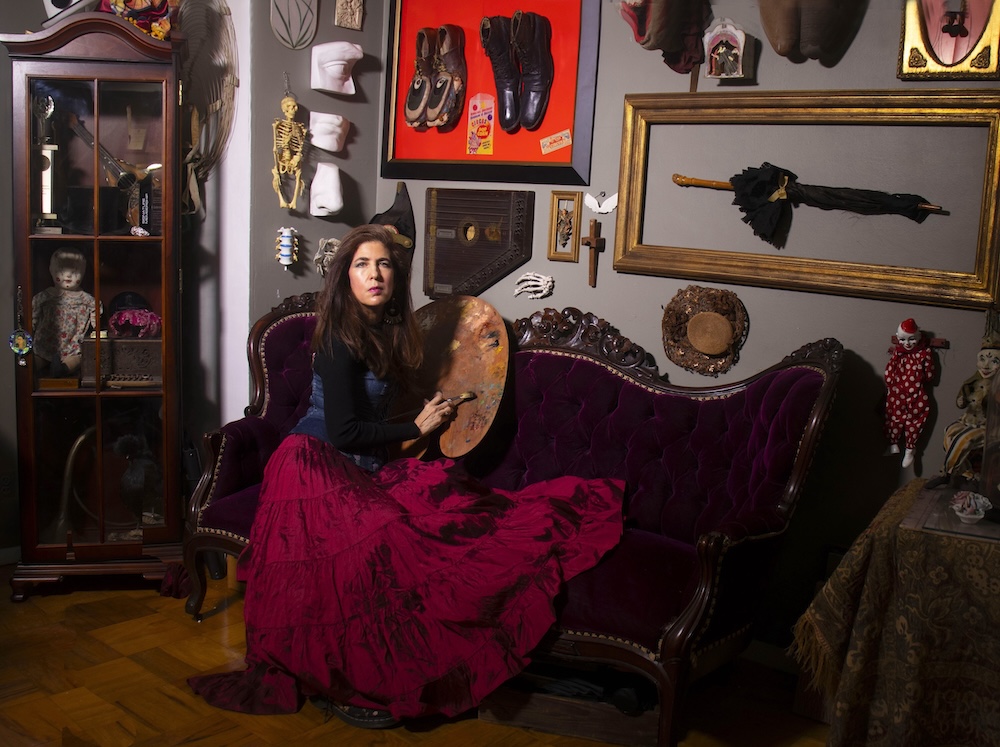
American artist Gabriela Gonzalez Dellosso brings together technical mastery, imagination, and a deep passion for storytelling. Her realistic paintings go beyond the faithful representation of the visible world, inviting viewers into carefully constructed scenes filled with atmosphere, emotion, and meaning. For Dellosso, the story always comes first, while realism becomes a powerful tool for expressing ideas and creating a world that feels both convincing and deeply personal.
Inspired by the Old Masters, including Rembrandt, Velázquez, and Vermeer, as well as remarkable women artists such as Artemisia Gentileschi and Adélaïde Labille-Guiard, Dellosso continually explores the connections between art history, identity, and the female experience. Her creative process combines imagination, observation, photographic references, and a thoughtful understanding of composition, color, and light.
In an era dominated by digital images and instant visual experiences, Dellosso remains committed to the unique qualities of traditional painting. She believes that a realistic painting must ultimately be experienced in person, where the physical presence of the artwork reveals the skill, time, and human effort behind its creation.
In this interview, Gabriela Gonzalez Dellosso discusses the influences that have shaped her artistic vision, the delicate balance between precision and spontaneity, and the enduring power of realism to communicate ideas and tell stories. She also reflects on what she hopes viewers will discover when they encounter her paintings: a world so vivid and compelling that they can almost imagine stepping inside it.
How would you describe the central idea or philosophy behind your work as an artist?
I have always been interested in making stories using pictures. My motivation is narrative first, not visual. The topics I choose reflect who I am, so it is natural that I have spent decades exploring the idea of my identity as a female and all things related to it. What you encounter in my work always reflects some aspect of who I am.
Your paintings have a strong sense of realism, yet they also convey atmosphere and emotion. What does “realism” mean to you personally?
Realism is a tool in the art toolbox. It allows me to create a reality, as I see it. It is powerful, because I can use this tool in combination with how I feel about the picture I am making. The atmosphere and emotion does not really come from the realism. It comes from all the choices that go into the making of the picture. Learning how to use realism and making the right choices (“editing”) takes years of experience. Through my experience, I have learned how to use realism to tell different types of stories.
Who were the artists who influenced you most when you were developing your own visual language?
I grew up going to the Metropolitan Museum of Art in New York City—that was my museum. I remember my visits with my father, admiring Rembrandt, Velázquez, Vermeer, Rubens, and many others. It was not until later in life that I discovered the work of women who painted throughout history, like Adélaïde Labille-Guiard, Artemisia Gentileschi, Evelyn De Morgan, and so many others, whose work really influences my way of making a painting. My visual language grows every day from discovering all the work that they have made.
How do you choose the subjects and moments that become paintings? Is there usually a story behind a particular work?
I usually focus on a subject I find compelling or an idea that sparks my interest. It could be anything. I am a storyteller first, then I am the visual artist second. The visual must serve the narrative. The difficult part is making the two things—storytelling and visual interpretation—work well together. That involves a lot of things. Experience is necessary to do it well.
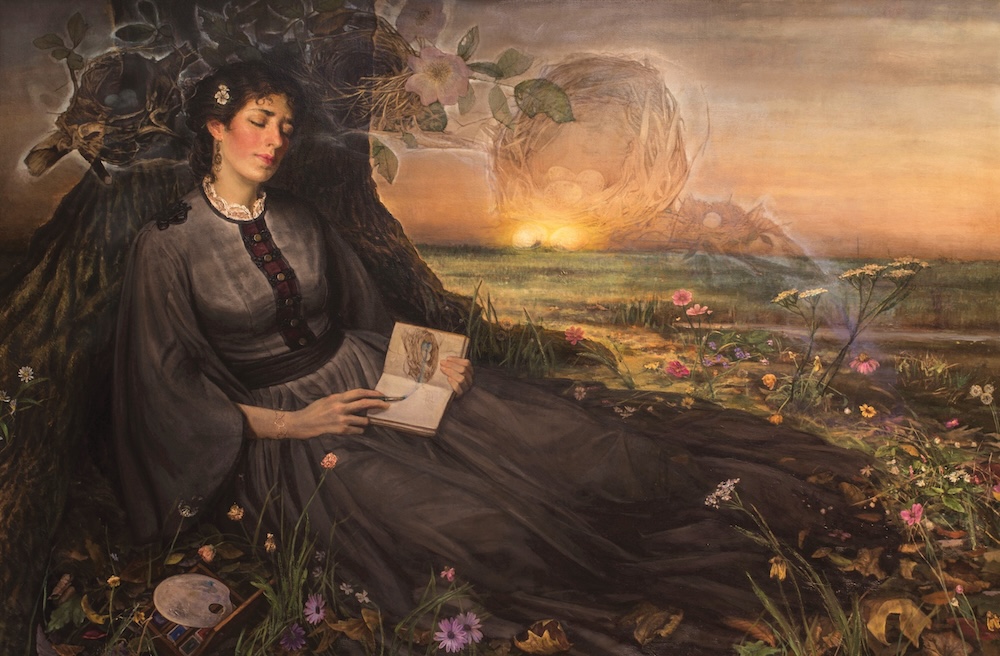
Light plays an important role in creating the atmosphere of your paintings. How do you work with natural and artificial light?
Light is a key player in creating realistic paintings. There are two ways of interpreting light. The first way is through direct observation, analyzing the way light travels across surfaces and how it interacts with the subject in reality. The second way is how light can be used to enhance your subject in your chosen image. The second way is an interpretation. It does not necessarily follow reality. I use artificial light when I want to control intensity and direction in ways that natural light can’t duplicate. Natural light is beautiful, and I will use it if I have window light available and it suits my needs. The artist has to decide how they want to use the light to serve the artwork. Those decisions will create the mood and atmosphere in the art.
How much of your process is based on direct observation, and how much comes from imagination, memory, or photographic references?
If I could choose, I would work from direct observation and my imagination. I painted from life every day for two decades in my formative years. I love creating self-portraits because I can always refer to the mirror image of myself without the expense of a model. My ideas always originate in my imagination. Many times, I see an image and pursue the image I want to make based on my imaginative idea. I pursue the image, building it from real models and props. I use photo references to document and capture the realism.
How do you balance technical accuracy with spontaneity and emotion in your paintings?
Technical accuracy, spontaneity, and emotion all work together to convey the artist’s personality. Accuracy can create hyperrealism, naturalism, or an impression that conveys a very lively image. Spontaneity, if not controlled, can destroy the accuracy. The difficult part is editing the spontaneity—the marks, the textures, and the randomness—to serve the accuracy. This requires editing, which is a skill, so the work remains fresh, not too mechanical and not too haphazard. The emotion will be expressed through the delicate balance of spontaneity and controlled accuracy. I feel this balance, when best expressed, reflects the artist behind the work.
What is the most challenging part of creating a painting for you: composition, drawing, color, light, or something else?
For me, the most challenging part is not really one thing. It is taking all the tools—composition, drawing, color, light, spontaneity, and many more things—and combining them to make an image that best expresses my vision of the idea behind a painting.
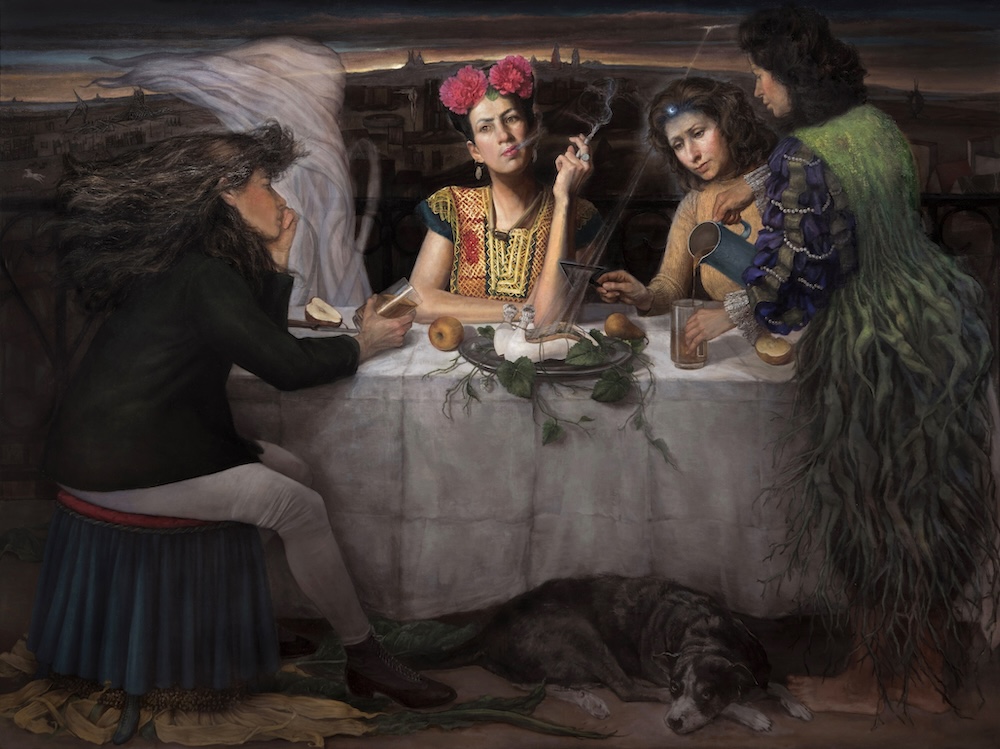
What is your relationship with traditional academic training? Do you think rigorous training is necessary for a contemporary realist painter?
I was not trained in the academic realist tradition. Let me explain my training: I painted from life for almost two decades with excellent, well-known realist artists who were not working in the academic realist method. I also illustrated books and magazines for many years during my formative years. I created incredibly complex compositions relatively quickly. I was not trained in an atelier. I did not learn the formal, classical atelier techniques. I have watched atelier videos and attended a couple of atelier workshops to understand what the classical method is all about. I do think rigorous training is necessary for most people to learn realism. It takes a lot of practice to be able to paint an image convincingly and with confidence.
Contemporary art often emphasizes conceptual ideas over traditional craftsmanship. Where do you think realistic painting belongs within today’s art world?
This is a complicated question. I think in order to answer it, I would consider the history of realism. Representing life through painted images has a very long history. Communication depended on it. Technology did not exist. Today’s world is full of visual forms of communication. We no longer depend on painted visual images to tell a story. And now, with the disposable digital image, we are oversaturated. I believe realism has a place where appreciation for a good handcrafted image exists. Realism is capable of being considered conceptual art too; it definitely can narrate an idea. It also offers the audience an escape from the five-second fix. Realistic painting offers an alternative form of art that is a slower-paced in today’s “instant” world.
What do you think contemporary realist painting can communicate that photography or digital imagery cannot?
I think that the key to realist painting is that it must be seen in person. It is not experienced in the same way as a photograph or digital image displayed on a screen. It must be viewed on a wall in a real place. If you see a good realist painting, you will appreciate the time, the effort, and the years of training and practice behind the execution of the piece. Methodology becomes much more apparent when you witness all the paint or drawing strokes on the surface. You also appreciate the physicality of it. Making art is physical. It takes movement and coordination to create the work, which ultimately is a sum of all its parts.
What would you like viewers to feel or think when they stand in front of one of your painting?
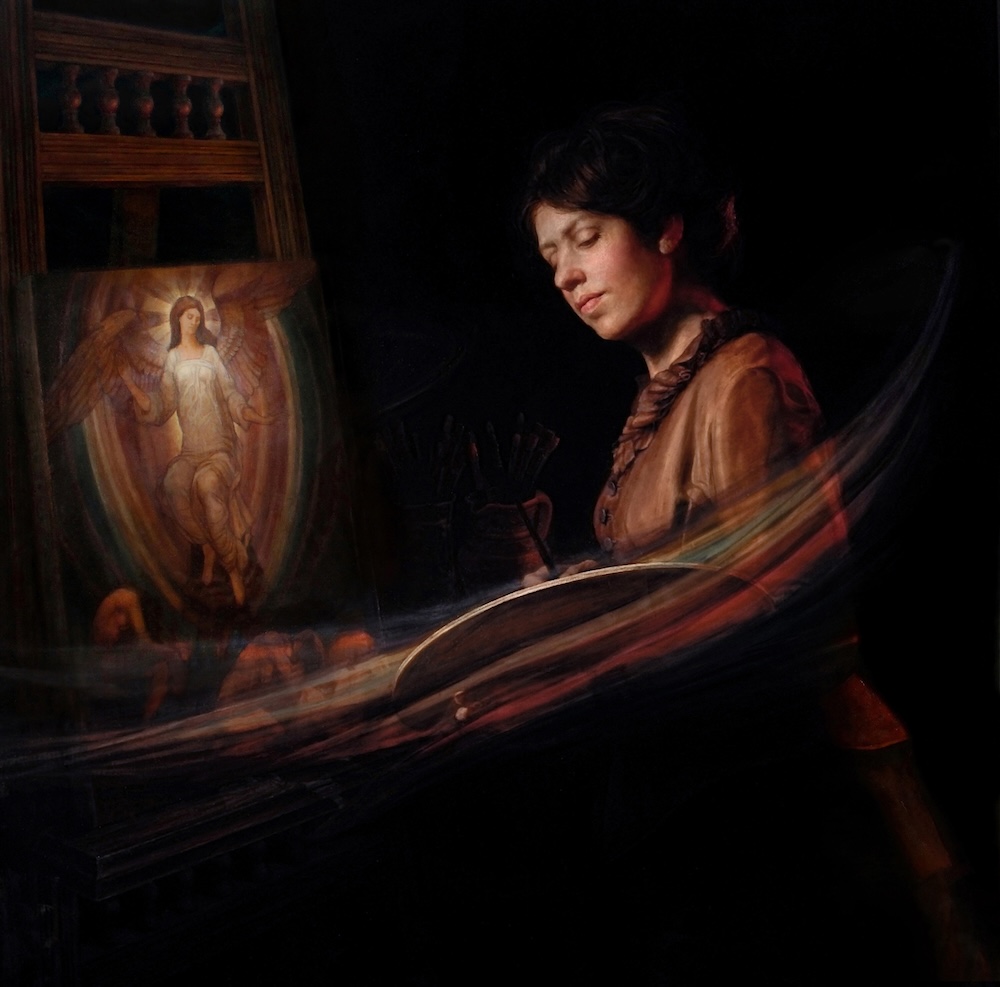
I would like the viewer to feel as though they are witnessing a story or event that I have created. I would like them to feel that I have created a world they could walk into.

Leave a Reply