

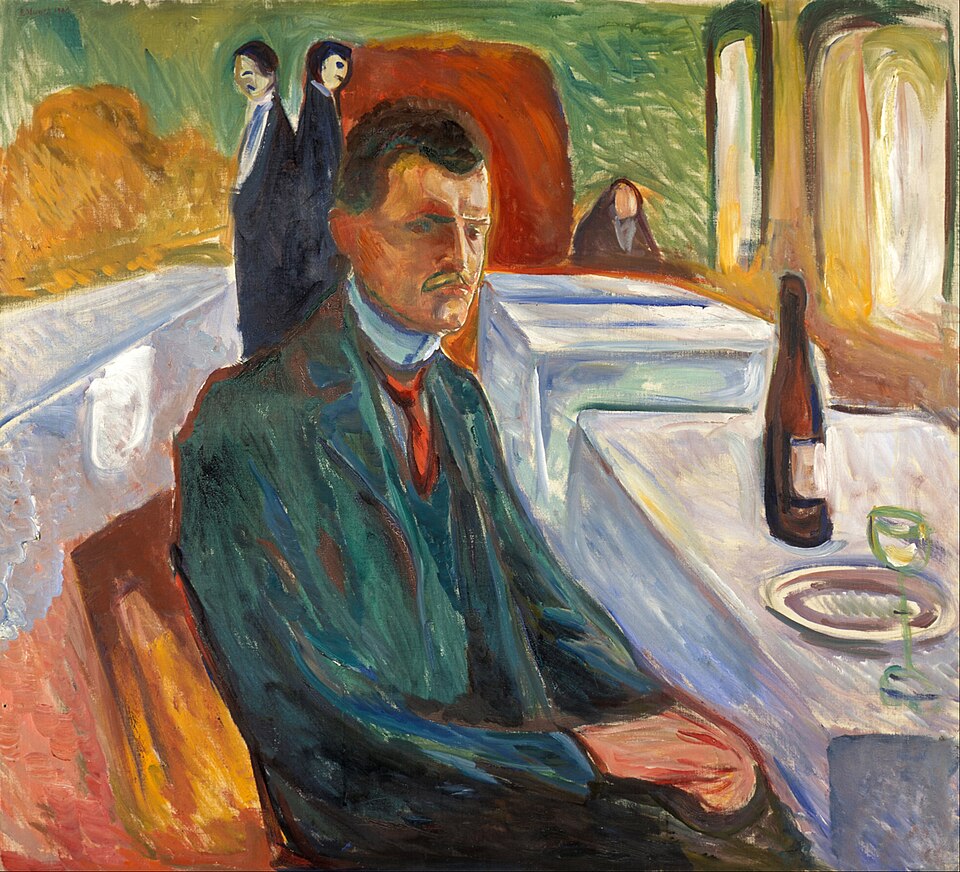
Behind every portrait in the National Portrait Gallery’s new exhibition lies a life marked by crisis, obsession, illness, and emotional upheaval. Edvard Munch did not merely paint anxiety — he lived it.
Born in 1863 into a family haunted by disease, Munch lost his mother to tuberculosis when he was five, and his beloved sister followed nine years later. These early traumas shaped the emotional atmosphere of his art. “Illness, insanity and death were the black angels that stood at my cradle,” he later wrote — a line that hangs over his entire body of work like a permanent winter sky.
Munch’s adult life was no calmer. His turbulent love affair with Tulla Larsen spiraled into obsession, jealousy, and heartbreak, culminating in a violent confrontation that left him injured and psychologically shaken. Alcohol, breakdowns, and periods in psychiatric clinics followed, but even amid crises, he painted obsessively, turning trauma into art. Friendships and professional relationships were often stormy; quarrels with fellow artists, patrons, and critics defined much of his career.
The Exhibition — A Journey Through Emotion
“Edvard Munch: Portraits” gathers more than sixty works, many rarely seen outside Scandinavia, offering London audiences an intimate view of Munch’s life. The exhibition is arranged chronologically and thematically, guiding visitors through early family portraits, turbulent romantic entanglements, friendships within the European avant-garde, and finally, his late self-portraits reflecting isolation and introspection.
Key highlights include portraits of Munch’s mother and sister, revealing private grief; depictions of lovers and friends, exposing desire, tension, and vulnerability; and a sweeping selection of self-portraits tracing decades of inner turmoil. Complementing these are preliminary sketches, studies, and rarely displayed works that illustrate Munch’s meticulous process and innovative use of color, line, and form.
The exhibition incorporates multimedia elements: letters, diary excerpts, photographs, and interactive digital displays contextualize each work, revealing the stories behind the brushstrokes. Visitors can explore how Munch’s personal crises informed his artistic choices, from subtle distortions in facial features to explosive, expressionistic color.
Special programming enhances the experience. Guided tours focus on Munch’s psychological techniques; curator talks provide insight into the historical and cultural context of his portraits; and late-night viewings and immersive installations allow visitors to feel the emotional intensity of the works firsthand. The gallery has also created a tactile section for visually impaired visitors, with textured reproductions of Munch’s brushwork, allowing all audiences to engage physically with the art.
Why It Matters
Curators emphasize that these portraits are far more than likenesses; they are studies of human emotion in its rawest form. Each work reflects the artist’s own experiences — grief, love, obsession, and isolation — offering visitors a rare window into a life lived on the edge of feeling.
Running from March to June 2025, “Edvard Munch: Portraits” is not just an exhibition; it is an immersive journey into the storm that shaped one of modern art’s most iconic figures. For London audiences, it offers a once-in-a-lifetime chance to see both the man and the myth, side by side, in vivid, unforgettable color.


Leave a Reply