

Las Vegas Museum of Art Unveils Desert-Inspired Design by Pritzker Laureate Diébédo Francis Kéré
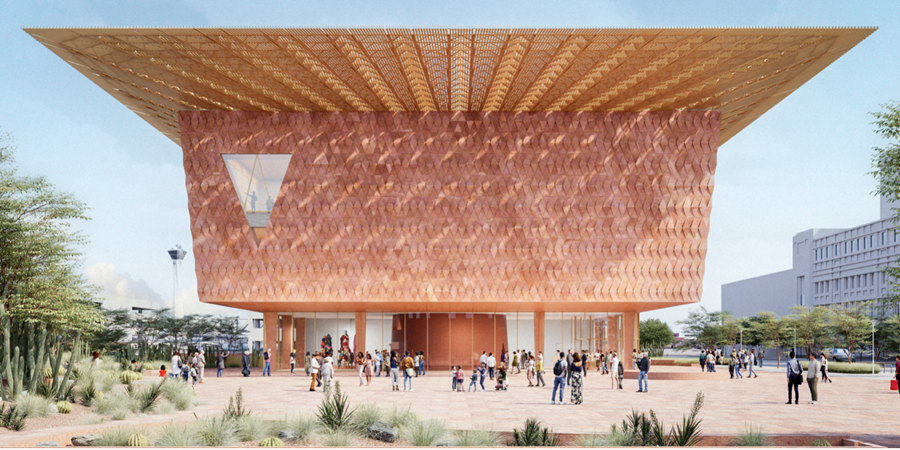
The Las Vegas Museum of Art has released updated renderings of its future headquarters, designed by Kéré Architecture—the Berlin-based studio led by Pritzker Prize–winning Burkinabè architect Diébédo Francis Kéré—in collaboration with SOM, which serves as architect of record.
Kéré is internationally acclaimed for an architectural practice grounded in social responsibility, climate-sensitive design, and the intelligent use of local materials, particularly in regions facing extreme environmental conditions. His projects often prioritize passive cooling, shaded communal spaces, and architecture as a civic act—principles that strongly inform the museum’s design. The Las Vegas project marks a significant cultural commission for Kéré in the United States, translating his human-centered approach to the Mojave Desert climate.
First announced last year, the museum will occupy a former parking lot in Symphony Park, a growing cultural district in downtown Las Vegas. The newly released images show a bold trapezoidal main volume clad in diamond-shaped bricks made from locally sourced stone, a material strategy intended to anchor the building visually and environmentally to its desert surroundings.
At the base of the structure, a circular interior volume houses a grand staircase conceived as a social and spatial focal point. Above, a wide latticed roof extends dramatically beyond the building’s envelope, creating a deep overhang that shades the façade and surrounding plaza. This generous roof eave is envisioned as a “front porch” for the museum—an inviting, semi-public threshold that encourages gathering while mitigating heat through shade and airflow.
According to the museum, the design draws inspiration from the Red Rock Mountains of the Mojave Desert as well as Las Vegas’s modernist architectural legacy. Together, these references are woven into a contemporary form that balances monumentality with openness, and environmental performance with civic presence. The result is a museum conceived not only as a destination for art, but as a climate-responsive public space embedded in the life of the city.


Leave a Reply