

Pace Gallery’s Berlin space is set to reveal a lesser-seen yet foundational side of David Lynch: the painter. The upcoming exhibition presents a concentrated selection of Lynch’s paintings and related works, reaffirming that his visual art was never an offshoot of his filmmaking, but its origin and constant undercurrent.
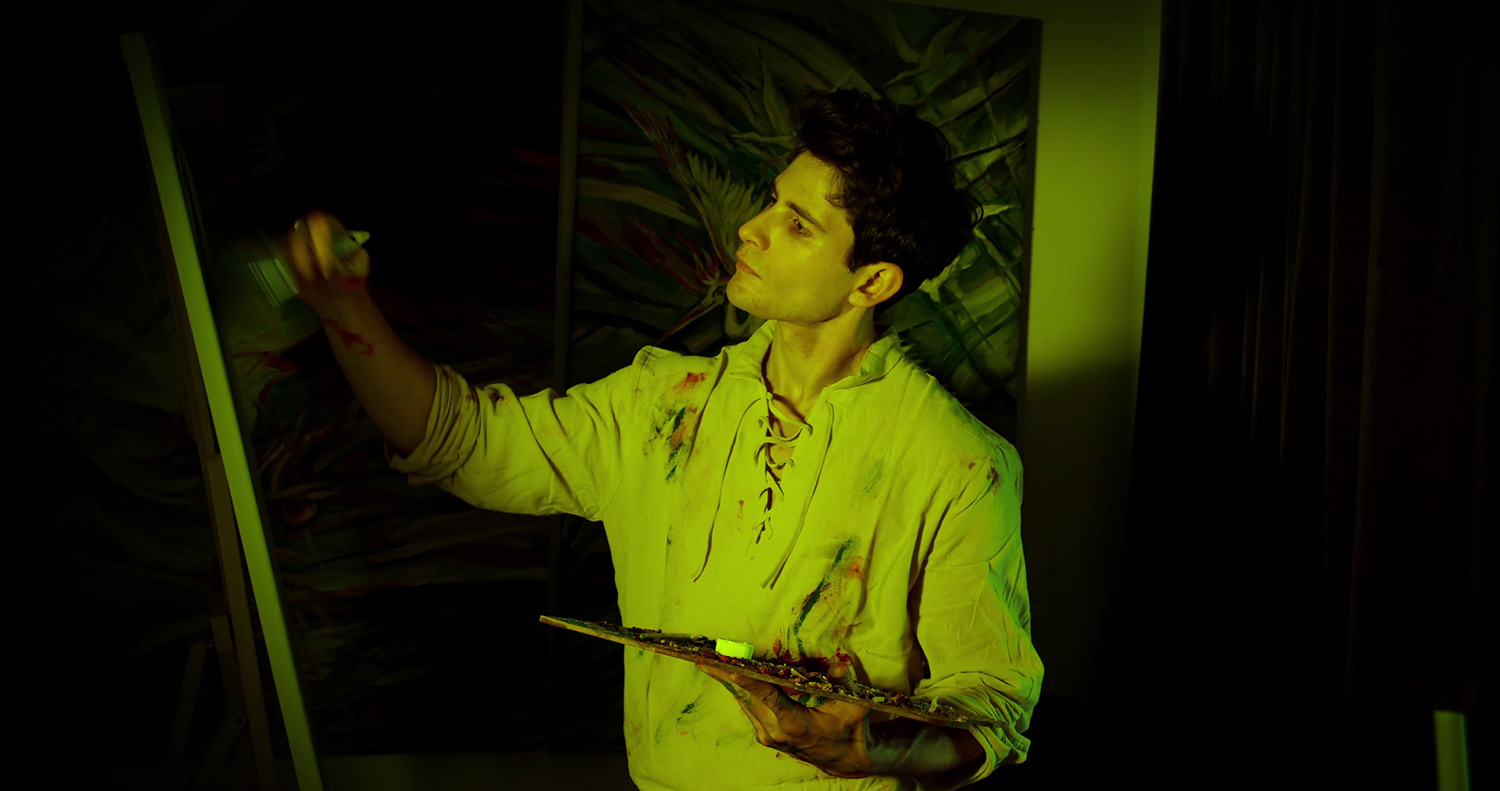
Long before Twin Peaks or Mulholland Drive, Lynch identified himself as a painter. His canvases—raw, tactile, and psychologically charged—operate as sites of disturbance rather than representation. Figures dissolve into matter, words become wounds, and surfaces bear scars of scraping, staining, and erasure. These works do not illustrate ideas; they emit states—fear, erotic tension, menace, and dark humor.
At Pace Berlin, the paintings are shown alongside watercolors, photographs, and sculptural light works, creating an environment rather than a conventional hang. Lynch’s upright lamp sculptures—industrial, totemic, faintly anthropomorphic—cast unstable light that transforms the gallery into a cinematic threshold. They echo his obsession with illumination not as clarity, but as exposure: light that reveals too much.
A series of photographs taken by Lynch in Berlin in the late 1990s adds a documentary counterpoint. Depicting abandoned factories and decaying urban structures, these images resonate with the same desolate beauty found in his films—spaces where something has happened, or is about to. The city appears not as location, but as psyche.
What emerges from the exhibition is a portrait of an artist deeply committed to the materiality of dread. Lynch’s paintings reject polish and coherence. Instead, they insist on the irrational, the grotesque, and the unresolved. Text often appears embedded in the image, not to explain but to accuse, whisper, or mock.
Shown in Pace’s former gas station in Berlin—a space already charged with industrial memory—the exhibition feels uncannily at home. It positions Lynch not simply as a filmmaker who painted, but as a visual artist whose entire oeuvre, across media, was driven by the same relentless inquiry into the darkness beneath everyday surfaces.
For Berlin, a city marked by history, fracture, and reinvention, Lynch’s work lands with particular force: unsettling, intimate, and profoundly unresolved.


Leave a Reply