

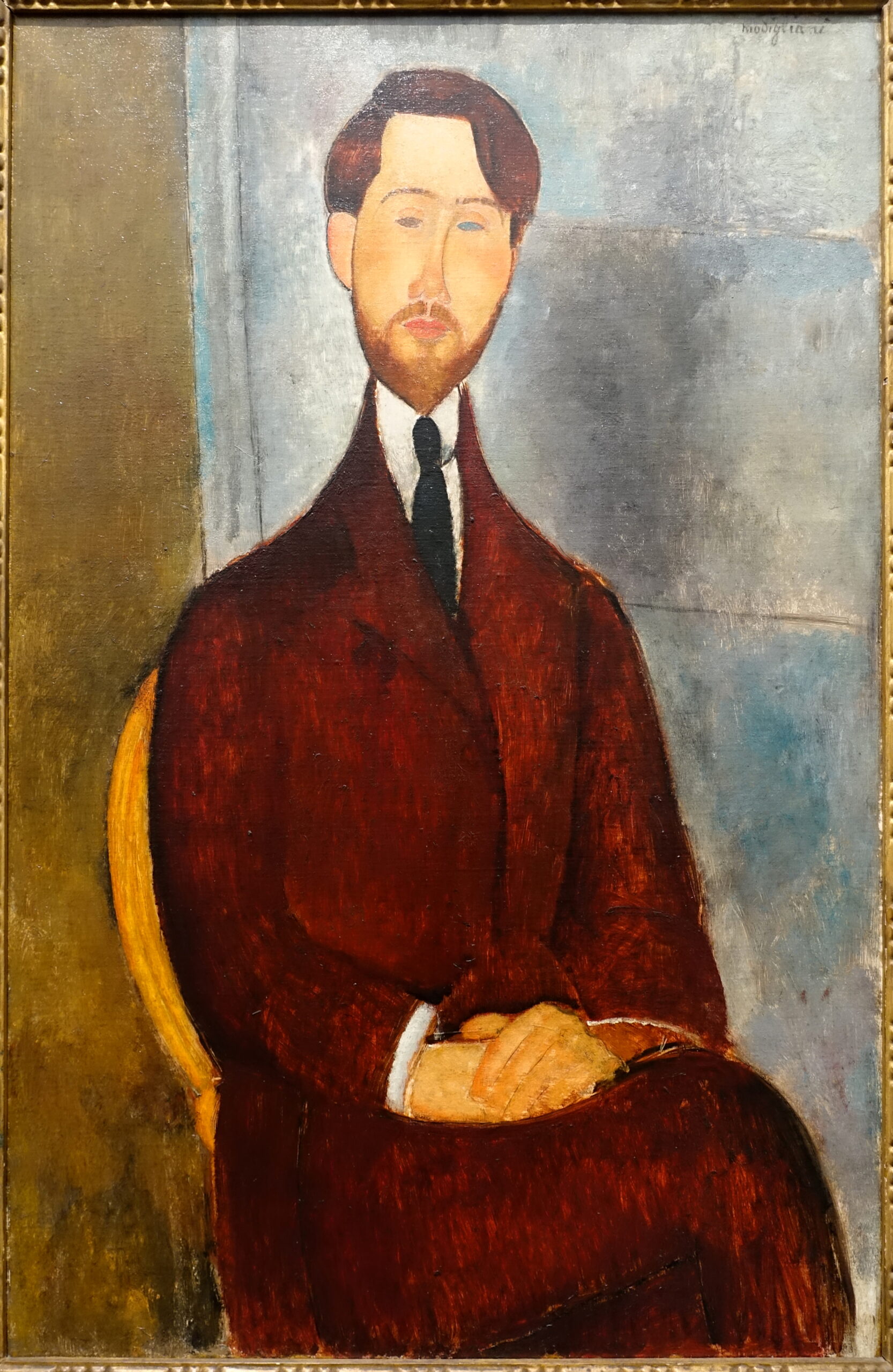
The already-volatile market surrounding Amedeo Modigliani has been jolted once more. This week, a long-time collector filed a lawsuit against Sotheby’s, accusing the auction house of refusing to honor an agreement to resell a painting attributed to the artist—because of the house’s own doubts about the work’s authenticity.
The dispute centers on Portrait de Leopold Zborowski, a 1917 canvas said to depict Modigliani’s trusted dealer and patron. The painting was purchased at Sotheby’s in 2003 for $1.55 million, accompanied by a provenance that reached back to Zborowski himself and by mention of its inclusion in a 1934 Modigliani retrospective in Basel. For many collectors, such details would have been reassuring—at least at the time.
Yet according to the lawsuit, the confidence unraveled quietly behind the scenes.
The collector, Charles C. Cahn, Jr., claims that in 2016 Sotheby’s privately informed him that the painting did not meet certain standards the house required for a Modigliani attribution. The appraisal, he says, suggested the work held no viable sale value on the international market. No formal written report was provided, but an agreement was signed: Sotheby’s would allow Cahn to resell the work through the house anytime within the next fifteen years, reimbursing him the original sum plus interest.
The lawsuit asserts that when Cahn attempted to consign the painting in June of this year, the auction house remained silent. A follow-up letter sent by his lawyer in September also, allegedly, received no response. Cahn is now seeking $2.67 million in damages.
Sotheby’s has declined to comment on the pending litigation.
Modigliani’s work has been dogged by forgery scandals for decades. The artist’s distinctive portraits—elongated necks, almond eyes, restrained sensuality—are among the most recognizable in modern art, which has made them irresistible targets for counterfeiters. Scholars and specialists routinely describe Modigliani authentication as one of the thorniest fields in the art world.
Several high-profile scandals have rocked the market, including the notorious 2017 Italian investigation in which more than a dozen supposed Modiglianis were removed from an exhibition and seized as suspected fakes. Publications have spoken openly of a “forgery epidemic,” and multiple estates, committees, and scholars have disagreed over which works should be accepted as genuine.
Against this troubled backdrop, even a painting with historical exhibition records and plausible provenance can become vulnerable to scrutiny.
In an era when the value of masterpieces hinges not only on beauty but on the reliability of documentation, a single contested painting becomes a larger question of confidence in the system.
Portrait de Leopold Zborowski sits at the intersection of Modigliani’s intimate artistic circle and today’s global art market, now entangled in legal and scholarly uncertainty. Whether the canvas is ultimately judged authentic or dismissed, the lawsuit underscores a deeper truth: Modigliani’s legacy remains as enigmatic—and as vulnerable—as the faces he painted.



Leave a Reply