

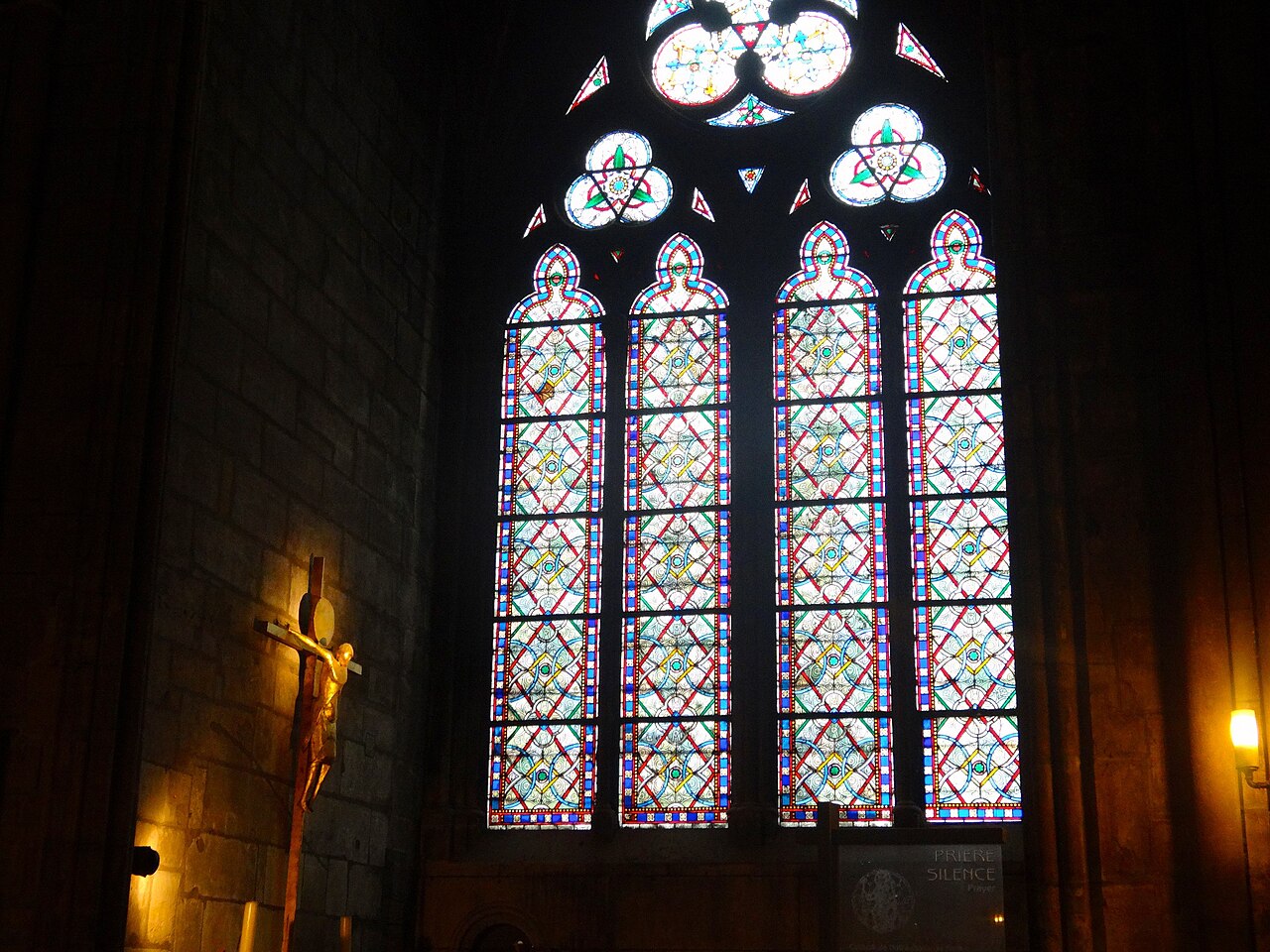
Paris stands on the brink of committing an act that many heritage specialists describe, without hesitation, as vandalism of the highest order. The plan to rip out Notre Dame’s original 19th-century stained-glass windows—perfectly intact after the 2019 fire—is proceeding, despite an avalanche of protests from architects, historians, and defenders of cultural memory.
From tomorrow, the Grand Palais will unveil the proposed replacements: six monumental stained-glass designs by Claire Tabouret. The exhibition is meant to inspire admiration. Instead, for many, it confirms their worst fears. The quiet gallery, reached by three spiralling flights of stairs, is lined with 7-metre ink-on-paper maquettes—bright, loud, insistent—and waiting to take the place of windows that suffered not a single crack in the blaze.
To critics, the entire project is nothing short of outrageous.
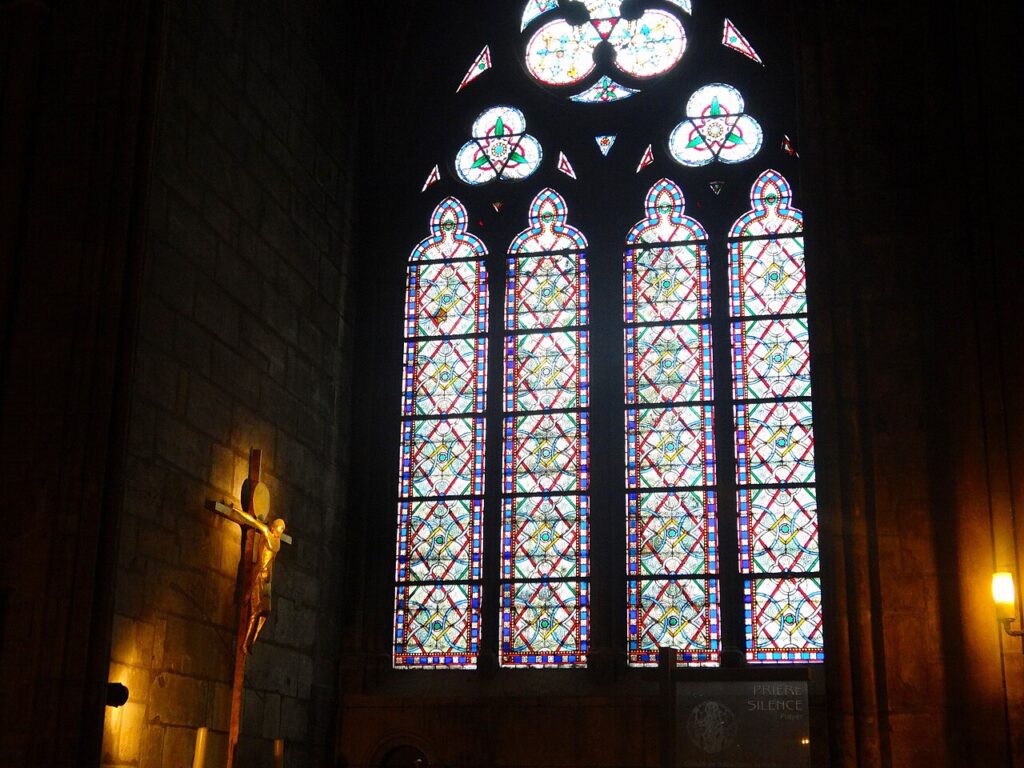
The original windows, conceived by Eugène Viollet-le-Duc and Jean-Baptiste Lassus, are central to the cathedral’s identity. They were not damaged. They do not require replacement. They require nothing more than careful restoration where needed, and protection from fashion-driven whims. “To remove surviving historic glass is cultural mutilation,” one veteran conservator declared. “It would be vandalism—tasteless, vulgar, and fundamentally disrespectful.”
But culture officials push forward. And Tabouret, now based in Los Angeles, embraces the firestorm. “Every new artistic intervention in Paris causes controversy,” she says. “The Buren columns, the Louvre Pyramid—they became beloved.” But this comparison rings hollow to critics. Buren and Pei added to empty spaces. Here, something precious must be destroyed to make room.
Tabouret’s designs—visions of the Pentecost rendered in blazing reds, greens, and blues—shift between human crowds and storm-tossed landscapes. Produced with the expertise of Atelier Simon-Marq, the works are undeniably striking. But to replace authentic 19th-century glass with contemporary interpretation, critics argue, is to break a sacred covenant with the past.
Tabouret insists she references the old windows. “I quote Viollet-le-Duc in every background ornament,” she says. Yet even the most elaborate homage cannot justify erasing the originals. Notre Dame is not a fashion runway. It is not a gallery for reinvention. It is a monument whose integrity was entrusted to the present generation—and that trust is being betrayed.
If the project moves forward, the consequences will be permanent. The original glass will be gone forever, replaced not because it was destroyed, but because someone thought they could do better. And that, experts warn, is the most dangerous precedent of all: that surviving heritage can be discarded at will.
Paris has rebuilt its cathedral’s spire. But if it sacrifices the authentic windows it miraculously preserved, it will have lost something far greater—its respect for history, and its understanding of what deserves to endure.


Leave a Reply